


Space Maintainers for Kids: What to Do After Early Baby Tooth Loss

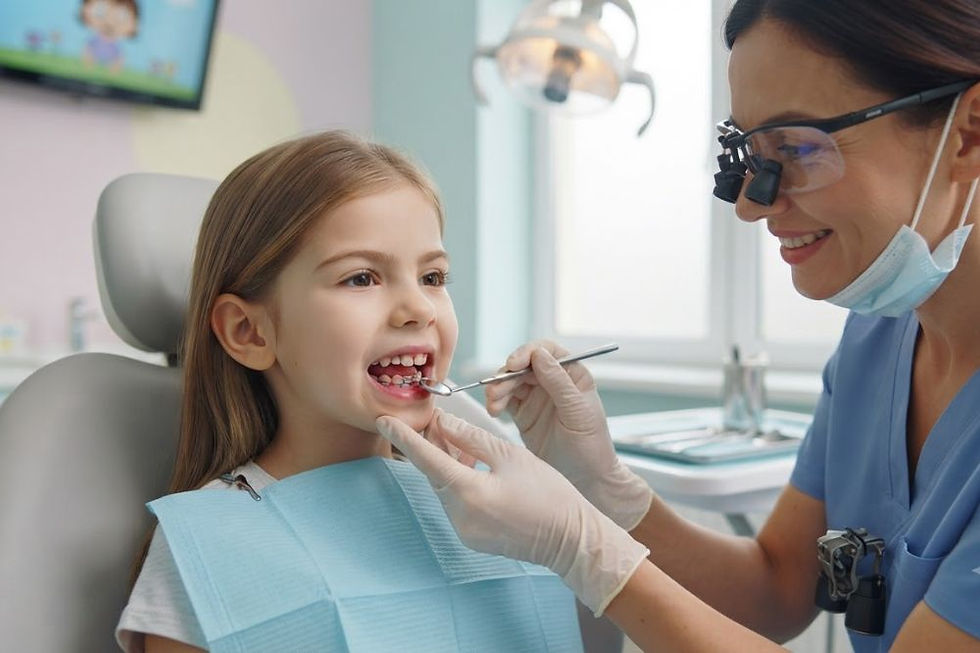
When a child loses a baby tooth early, parents wonder what comes next. Losing it too soon can let neighbouring teeth drift, crowding the space meant for the permanent tooth.
Whether the tooth was lost to decay, injury, or an infection a root canal couldn't fix, a space maintainer may help. Here's what parents should know and when to act.
What Is a Space Maintainer and How Does It Work?
A space maintainer is a small, custom-made dental appliance that holds open the gap left by a missing baby tooth. It's made of stainless steel or acrylic, and it keeps neighbouring teeth from drifting until the permanent tooth is ready.
Unlike braces, it does not actively move teeth. It simply acts as a placeholder while the adult tooth develops underneath. Most children adjust within a few days, and your dentist safely removes it once the permanent tooth begins to erupt.
Why Early Baby Tooth Loss Can Cause Problems
Baby teeth do more than help children chew. They guide permanent teeth into place, so losing one too early can upset the balance of the mouth and affect tooth alignment.
Teeth Drift Into the Gap: Neighbouring teeth can tip or slide into the space within months, especially after a molar is lost, reducing the room for the permanent tooth.
Crowding and Crooked Teeth: When space is lost, adult teeth may not have enough room to come in straight, causing overlapping or twisted teeth that are hard to clean.
Impacted or Misplaced Permanent Teeth: A permanent tooth without a clear path may erupt in the wrong position or become stuck beneath the gum, sometimes needing extra dental care later.
Possible Orthodontic Treatment Later: Significant space loss may raise the chance of braces in the teen years, though early tooth loss does not guarantee orthodontic treatment will be needed.
Chewing and Speech Effects: Missing teeth can make chewing less comfortable and, in some children, may affect how certain sounds are pronounced, especially when several teeth are lost early.
The good news is that early evaluation really helps. A dentist can check your child's spacing and recommend either a space maintainer or simple monitoring.
Does Every Child Need a Space Maintainer?
No, not every child who loses a baby tooth needs a space maintainer. The decision depends on several factors, and your dentist weighs each one before recommending anything.
Which Tooth Was Lost
Back teeth, especially baby molars, play a major role in holding space. When one is lost early, a space maintainer is often recommended because neighbouring teeth tend to shift quickly.
Front baby teeth are different. Permanent front teeth usually erupt soon after they fall out, so the risk of space loss is lower, and simple monitoring is often enough here.
How Soon the Permanent Tooth Will Erupt
Timing matters. If the adult tooth is due within six months of a baby tooth extraction, a space maintainer may be unnecessary, since neighbouring teeth have little time to drift.
If the permanent tooth is still a year or more away, the gap stays open longer. In that case, holding the space usually becomes far more important for proper alignment.
The Cause of the Tooth Loss
An infected baby tooth often needs to be removed early to protect your child's health. Once it is extracted, the gap can begin closing, so a space maintainer may follow.
Injuries and severe decay can also lead to sudden tooth loss. Because these situations are unplanned, the permanent tooth may be far from ready, which increases the chance of shifting.
Your Child's Age and Available Space
Younger children have more growing left to do, so that early tooth loss can have a bigger effect. Older children who lose a molar later often experience much less space loss.
Some mouths naturally have extra room, while others are already crowded. Your dentist measures the available space to decide whether teeth are likely to move into the empty gap quickly.
What Dental X-Rays Reveal
X-rays show where the permanent tooth is developing and how close it is to erupting. They also reveal whether neighbouring teeth have already started tilting toward the missing tooth's space.
This information takes the guesswork out of the decision. Sometimes the images show plenty of room and healthy development, which means your child can be monitored at regular checkups.
Every child is different, so there is no single answer. A proper exam is the best way to find out whether your child needs one.
Types of Space Maintainers
Space maintainers for children come in several designs. The right one depends on your child's age, the missing tooth, and how long the space must be held. Two main types are used.
Fixed Space Maintainers
Fixed space maintainers are cemented onto nearby teeth and stay put until the permanent tooth arrives. They suit younger children best, since they cannot be lost, misplaced, or accidentally forgotten.
Band-and-Loop: A metal band fits around one tooth, and a wire loop holds the gap open. It is the most common design for a single lost molar.
Crown-and-Loop: A small crown replaces the band when the supporting tooth needs extra protection, such as after a large cavity or a pulpotomy.
Distal Shoe: A metal extension guides a permanent molar into place when a baby molar is lost before the adult tooth has come in.
Lingual Arch: A wire spans the lower arch, connecting the back teeth on both sides. It is used when several teeth are missing.
Removable Space Maintainers
Removable space maintainers resemble retainers and can be taken out for cleaning. They are usually made of acrylic and work best for older, responsible children who will wear them consistently.
Custom Acrylic Design: A plate is made to fit your child's mouth, and it may include an artificial tooth to fill the gap.
Easy to Clean: Your child can remove it to brush both the appliance and their teeth thoroughly.
Depends on Cooperation: It only works when worn as directed, so consistency matters.
Easier to Lose or Break: It can be misplaced or damaged, which makes it a less common choice for young children.
Your dentist will recommend the best option after an exam and X-rays, so your child gets a fit that works.
What to Do If Your Child Loses a Baby Tooth Early
Finding out your child has lost a baby tooth too soon can be worrying, but staying calm helps. A few simple steps can protect your child's comfort and their smile.
If the tooth was loose and ready to fall out, there is usually nothing to worry about if it came out early; act soon, especially when a molar is involved.
Note What Happened: Write down which tooth was lost, when, and how. This helps your dentist judge your child's risk of space loss.
Book a Dental Visit Soon: Schedule a visit within a few weeks, especially for baby molars, since space can begin closing within a few months.
Expect an Exam and X-Rays: The dentist will check your child's bite and spacing, then take X-rays to see where the permanent tooth is developing.
Get Urgent Care for Injuries: If your child has swelling, fever, or severe pain after an injury, call your dentist immediately or seek emergency care.
Keep the Area Clean: Brush gently around the gap twice daily and rinse with water. Good hygiene helps protect the nearby teeth from decay.
Dentistry At Sullivan Protects Your Child's Smile
Early baby tooth loss doesn't have to mean future dental problems. With a timely exam and the right plan, whether a space maintainer or simple monitoring, your child's permanent teeth can come in properly. Here at Dentistry At Sullivan, our team offers gentle, personalized care for growing smiles.
Book your child's appointment today and give their smile the best start.


Comments